
Source of TB infection

Microbiologically confirmed pulmonary Tuberculosis (TB), is the most common and infectious form of tuberculosis and forms the major source of infection in the community.


Every sputum smear-positive patient has the potential to spread the infection to 10 – 15 persons annually, if untreated.


An infectious TB patient becomes a source of infection for all close contacts (household members, workplace coworkers, students studying in the same class or people coming in close contact with such a case).
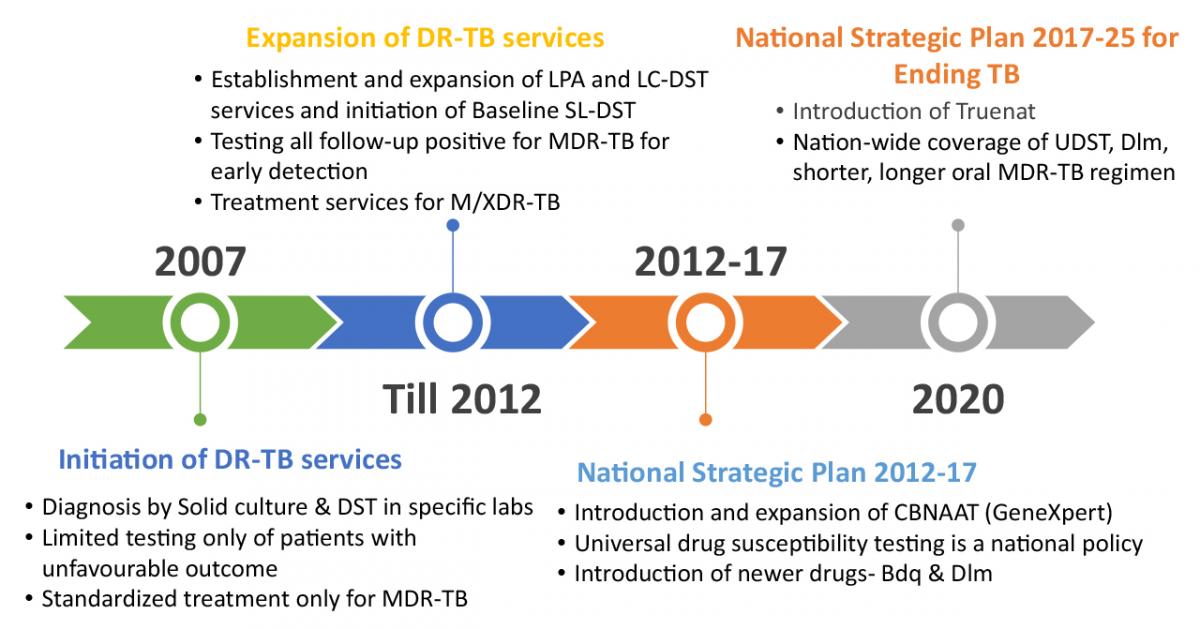
 

Constituents of Monthly Patient-wise Boxes [PWB] for Shorter Oral Bedaquiline-containing MDR/RR-TB Regimen

The patient on shorter oral Bedaquiline-containing multi-drug resistant (MDR)/rifampicin resistant TB (RR-TB) regimen shall be put on Type A and Type B box when initiated on treatment on a monthly patient wise box (PWB). Bedaquiline (Bdq) needs to be issued separately and stopped after 6 months. The patient should be provided with only Type A boxes when started on continuation phase (CP).​

DR-TB Services and Functions of Stakeholders

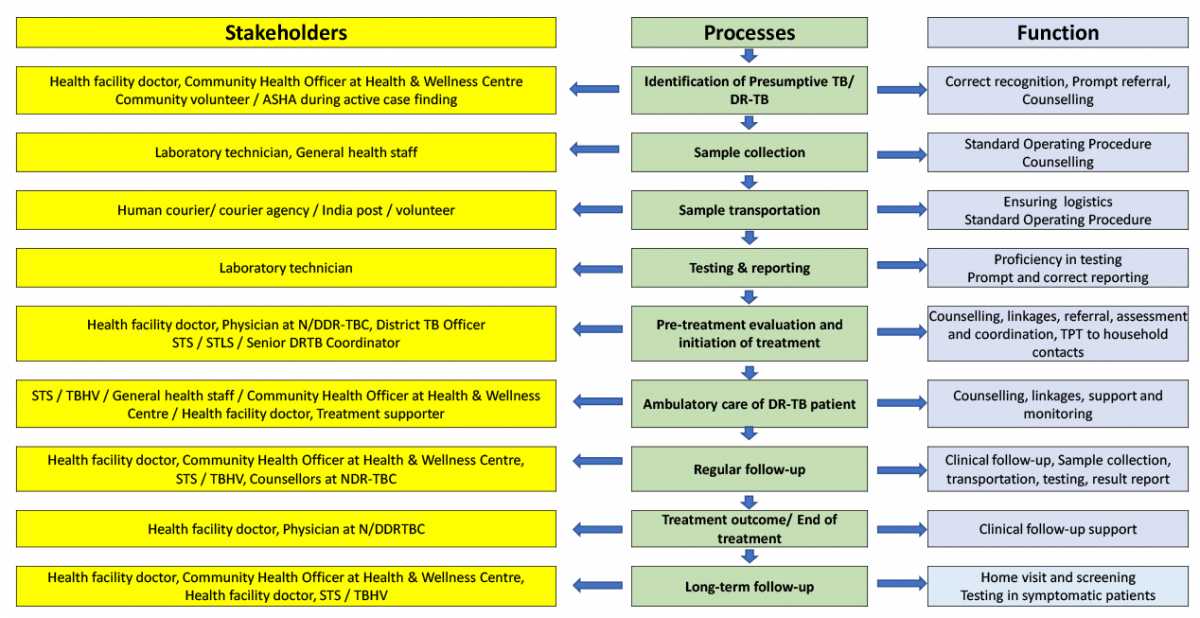
Each of the stakeholder plays important role in DR-TB service delivery and has specific responsibility which is being monitored. 


The flow diagram below depicts the processes involved in the delivery of drug-resistant tuberculosis (DR-TB) services and specific functions of various stakeholders.


Figure 1: Cascade of DR-TB services and functions of various stakeholders
Source: Guidelines for PMDT in India, 2021, p.8


Subscribe to