Follow-up Monitoring of DR-TB Patients
- Read more about Follow-up Monitoring of DR-TB Patients
- Log in to post comments
Follow-up Monitoring of DR-TB Patients


Follow-up Monitoring of DR-TB Patients
Key Considerations for the Use of Newer Drugs in DR-TB
Shorter Oral Bedaquiline-containing MDR/RR-TB Regimen: Drug Dose Administration
Inclusion and Exclusion Criteria for the Use of Bedaquiline
NTEP Services for Private Notified DR-TB Patients
The Difficult-to-treat TB clinic (DT3C) is an initiative to support Drug-resistant TB Centres (DR-TBCs) for better patient management.
The DT3C structure is intended to handhold and mentor District DR-TB centres (DDR-TBCs) for the effective management of Drug-resistant TB (DR-TB) cases.
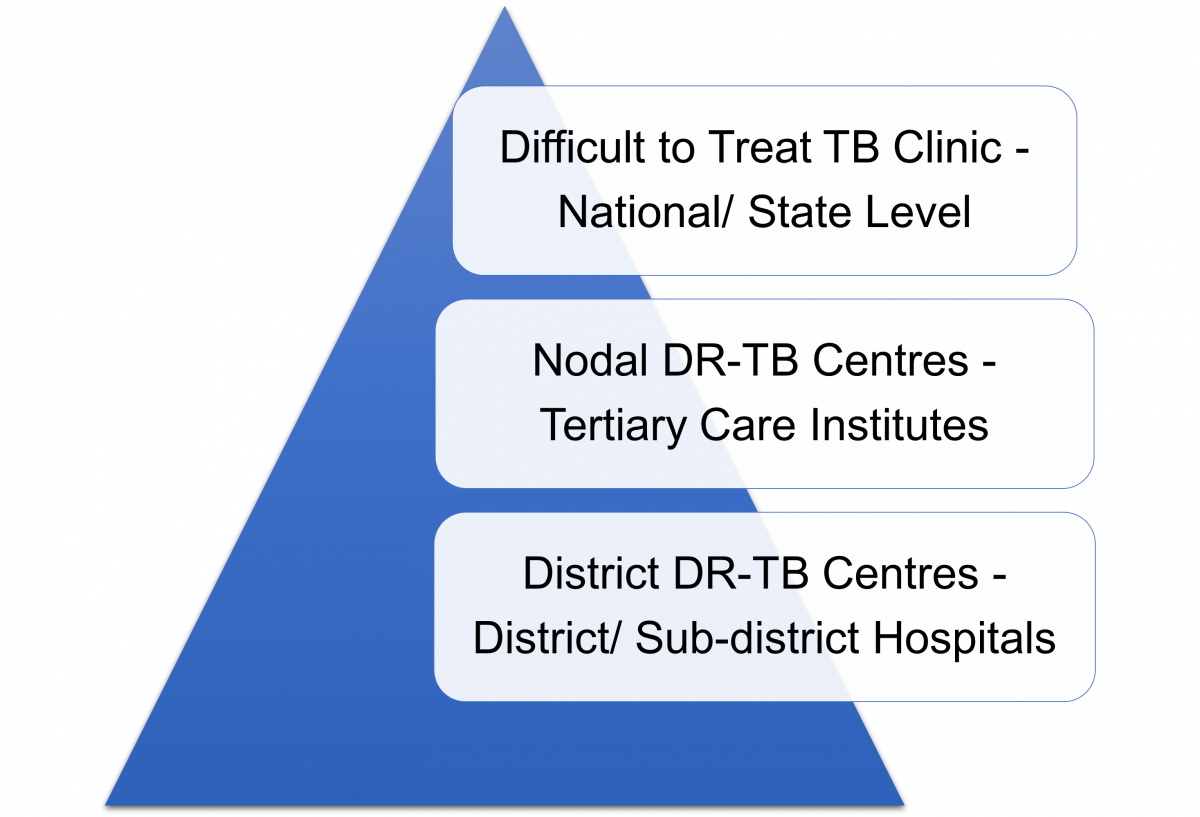
Figure: Difficult-to-treat TB Clinic: Three-tier Structure
The Nodal Drug-resistant Tuberculosis Centre (NDR-TBC) committee is a clinical committee that is responsible for taking decisions regarding the management of DR-TB patients at the NDR-TBC.
The composition of the NDR-TBC committee is provided in the table below.
District Drug-resistant TB Centres (DDR-TBCs) are dedicated centres for providing DR-TB services for patients and can be established at the district or sub-district level.
Nodal Drug-resistant Tuberculosis Centres (NDR-TBCs) are established to manage all forms of DR-TB, including complicated cases. Therefore, the centre should have:
The NDR-TBC is established as per the need and is generally in a tertiary care setting where expertise and facilities for the management of DR-TB are available.
Difficult-to-Treat TB Clinic [DT3C]