Management of M/XDR-TB Treatment During Pregnancy​

In pregnant women diagnosed with multi-drug resistant (MDR)/rifampicin-resistant TB (RR-TB), if the duration of pregnancy is <20 weeks*, the patient should be advised to opt for medical termination of pregnancy (MTP) in view of the potential severe risk to both the mother and the fetus. Figure 1 shows the management algorithm for pregnant patients based on their gestational age.
 

Explanation of Treatment of Non-tuberculous Mycobacteria [NTM]

Treatment of Non-Tubercular Mycobacterium (NTM) lung disease varies from person to person.  

Not everyone who is diagnosed with NTM lung disease needs to begin treatment right away. Some localized infections are very slow-growing and may or may not progress. Empirical therapy for suspected NTM lung disease is not recommended.  


The decision to start Non-tubercular Mycobacteria (NTM) treatment is based on: 

Molecular Basis of Genetic Code and Mutation

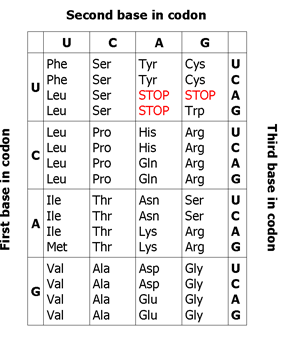
The genetic code is a triplet nucleotide sequence (codon) which encodes a specific amino acid during translation.


Figure 1: Genetic code


The three-letter codons consisting of four nucleotides found in mRNA (A, U, G, C) which produce a total of 64 different combinations. Of these 64 codons, 61 code for amino acids, the remaining three represent stop signals which trigger the end of protein synthesis (see Figure 1).


Central Dogma in the Function of DNA: Transcription and Translation

Transcription and translation together are responsible for Gene Expression.


Transcription 

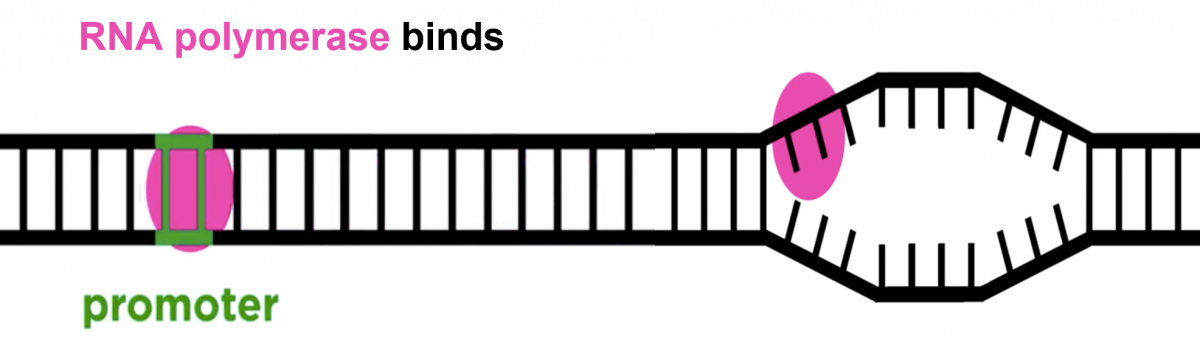
  • The transcription process involves the formation of m-Ribo-Nucleic Acid (RNA) from DNA (Deoxyribose Nucleic Acid).
  • One strand of DNA acts as a template, RNA polymerase associates with the DNA strand on the promoter region and transcription begins.


Central Dogma in the Function of DNA: Replication

Deoxyribose Nucleic Acid (DNA) carry genetic information that is transmitted to new cells/off-springs.

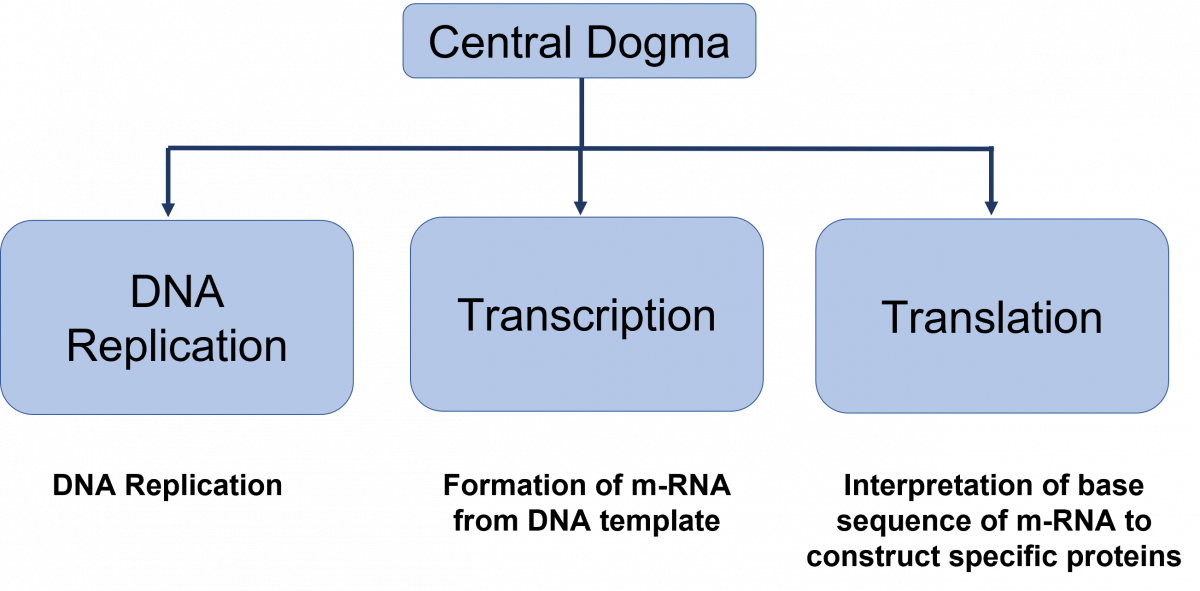
The process by which cells maintain their genetic information and convert the genetic information encoded in DNA into gene products is called the Central Dogma.


The central dogma of DNA (Figure 1) are replication, transcription and translation.


Figure: Central dogma of DNA functions


Structure of DNA in a Prokaryotic Cell

  • Deoxyribonucleic acid (DNA) is a molecule that contains genetic information.
  • DNA molecules have two nucleotide strands that wind around one another to form double helix structure.
  • Each nucleotide strand has a backbone made of alternating sugar (deoxyribose) and phosphate groups.
  • Attached to each sugar is one of four nitrogenous bases: adenine (A), cytosine (C), guanine (G), and thymine (T)
  • These bases occur in pairs, where in Adenine is always bonded to Thymine with a 2-H bonds and Cytosine bonded to Guanine with 3-H bonds.
Subscribe to