
Solid and Liquid Culture in TB

Culturing TB Bacilli is well known and historic method for detection/ confirmation of Tuberculosis. It is a highly sensitive and specific phenotypic test; it can detect even a few viable bacilli in the sample (Upto 10 Colony Forming Units- CFUs). TB bacilli multiply in the culture and form colonies of TB bacilli which can are easily be identified.

Based on the growth media used Culture is divided in to two types, Solid and Liquid Culture methods. Types Culture:
Solid and Liquid Culture in TB

Describe the laboratory method of culturing TB bacteria and its historic utility in diagnosing TB and that it still continues to be the gold standard diagnostic test for TB.

Discuss the solid and liquid culture types along with its major advantages/ disadvantages.

Discuss that Culture laboratories are setup in only advanced laboratories in select locations in the country.

Second Line LPA [SLLPA]

Second-line Line Probe Assay (SL-LPA) is a LPA to detect resistance to the second-line anti-TB drugs. This test is recommended for identifying TB patients with Multidrug-resistance (MDR) or rifampicin-resistance and those who can be placed on the shorter MDR-TB regimen.


The SL-LPA produces results in just 24-48 hours.


First Line LPA [FLLPA]

First Line (FL) LPA

  • Performed using GenoType MTBDR plus ver 2.0 kit
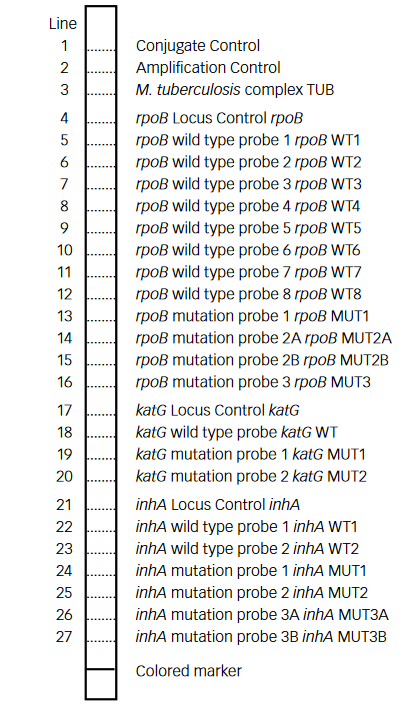
  • GenoType MTBDR plus (Figure) identifies:
    • Mutations in the Rif-resistance Determining Region (RRDR) of rpoB gene (from codon 505 to 533) to detect Rifampicin resistance
    • Mutations in the inhA promoter (from -16 to -8 nucleotides upstream) and the katG (codon 315) regions to identify Isoniazid resistance.


Line Probe Assay [LPA]

Line Probe Assay (LPA) is a rapid molecular test available at centralised laboratories.

The assay is based on Polymerase Chain Reaction (PCR) that can simultaneously detect Mycobacterium tuberculosis complex as well as drug sensitivity to anti-TB drugs.

Subscribe to