

Shorter oral Bedaquiline-containing MDR/RR-TB regimen
ContentBased on the World Health Organization (WHO) treatment guidelines, 2020 recommendations, the National TB Elimination Programme (NTEP) have decided to transition from the current shorter injectable-containing Multi-drug Resistant (MDR)/ Rifampicin-resistant TB (RR-TB) regimen to the shorter oral bedaquiline-containing MDR/RR-TB regimen in the year 2021.
Salient Features of the Shorter Oral Bedaquiline-containing MDR/RR-TB Regimen
- This regimen will be used in patients >5 years of age weighing 15 kg or more.
- The regimen will be expanded in a phased manner starting with selected states to gain programmatic experience to guide future expansion within 2021.
- The regimen consists of an initial phase of 4 months that may be extended up to 6 months and a continuation phase of 5 months, giving a total duration of 9-11 months. Bdq is used for a duration of 6 months.
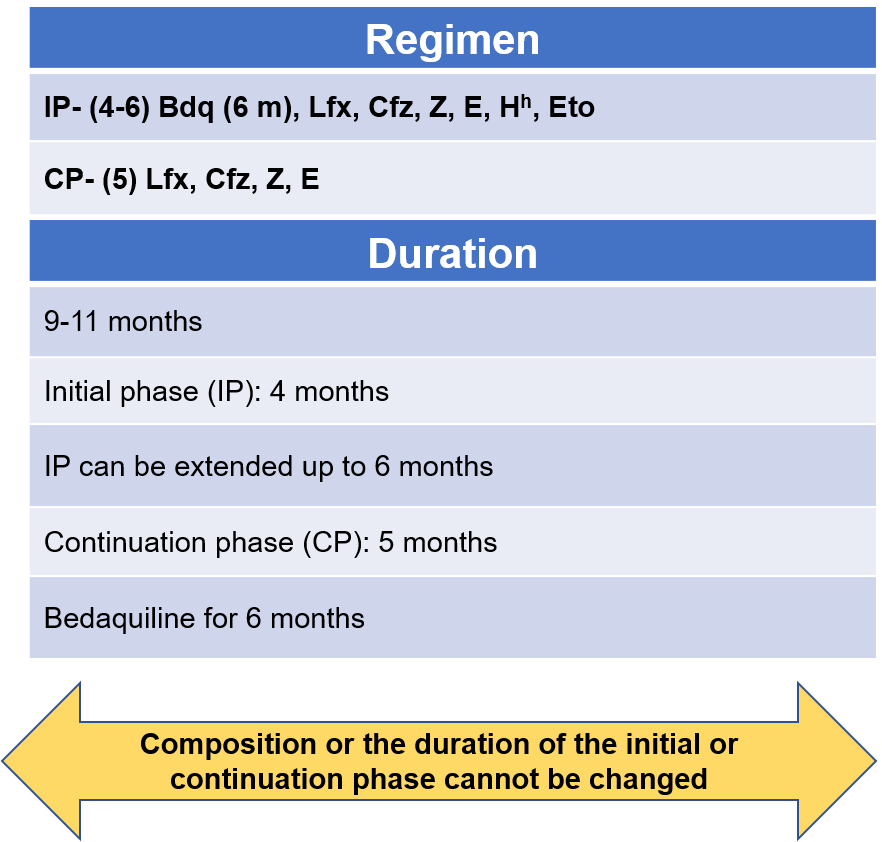
Figure 1: Regimen and duration of shorter oral Bdq-containing MDR/RR-TB regimen
Abbr: Bdq - Bedaquiline, Lfx- Levofloxacin, Cfz- Clofazamine, Z- Pyrazinamide, E- Ethambutol, Hh- High-dose Isoniazid, Eto- Ethionamide
Points to Note
- From the start to the end of 4 months these drugs are used: Bedaquiline, Levofloxacine, Clofazamine, Pyrazinamide, Ethambutol, high-dose Isoniazid, Ethionamide
- From the start of 5 months to the end of 6 months (If IP not extended): Bdq, Lfx, Cfz, Z, E
- From the start of 7 months to the end of 9 months: Lfx, Cfz, Z, E
If the IP is extended up to 6 months, then all 3 drugs Bdq, Hh and Eto are stopped together
Resources
- Guidelines for Programmatic Management of Drug-resistant Tuberculosis in India, March 2021.
- WHO Consolidated Guidelines on Tuberculosis, Module 4 - Treatment: Drug Resistant TB Treatment.
Kindly provide your valuable feedback on the page to the link provided HERE
Shorter Oral Bedaquiline-containing MDR/RR-TB Regimen: Treatment Extension
ContentThe total duration of treatment in this regimen is 9-11 months with Intensive Phase (IP) at least 4 months and Continuation Phase (CP) for 5 months. Treatment extension of IP is done up to 2 months based on follow-up results and is indicated in the algorithm presented in the figure below.
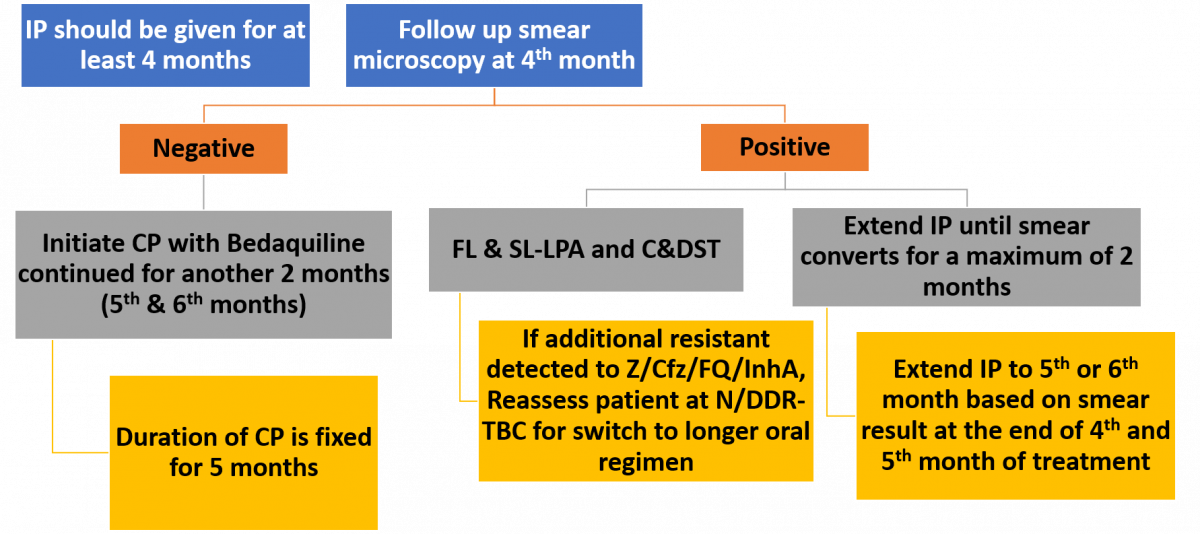
Figure: Treatment Extension/ Regimen Change Based on Follow up Smear/ Culture/ DST Results
Abbr: FL & SL- LPA- First Line & Second Line- Line Probe Assay, C&DST- Culture and Drug Susceptibility Test, Z- Pyrazinamide, Cfz- Clofazimine, FQ- Fluoroquinolone, N/DDR-TBC- Nodal/ District DR-TB Centre
Resources
- Guidelines for Programmatic Management of Tuberculosis in India, 2021.
- WHO Consolidated Guidelines on Tuberculosis: Module 4 – Treatment: Drug-resistant TB Treatment, 2020.
Shorter Oral Bedaquiline-containing MDR/RR-TB Regimen: Drug Dose Administration
ContentDrug dose administration for shorter/ longer oral Bedaquiline (Bdq)-containing Multidrug-resistant (MDR)/ Rifampicin-resistant (RR)-TB regimen depends on the factors described below.
- The dosage of second-line anti-TB drugs would vary as per the weight of the Drug-resistant TB (DR-TB) patients. There are five weight bands in adult patients (≥ 18 years): <16 kg, 16-29 kg, 30-45 kg, 46-70 kg and >70 kg. The weight bands of adult patients for Drug-sensitive TB (DS-TB) patients are different compared to DR-TB patients.
- All morning doses should be supervised by the treatment supporter via Directly Observed Treatment, Short-course (DOTS).
- In patients with drug intolerance, Cycloserine (Cs), Ethionamide (Eto) and Sodium (Na) Para Aminosalicylic Acid (PAS), can be given in two divided doses. Pyridoxine should be provided as part of the regimen till the end of treatment for all patients.
Change in Weight Bands during Treatment
- For adult DR-TB patients whose weight increases or decreases by 5 kg or more compared to baseline weight and crosses the current weight band during the course of the treatment, the weight band must be changed at the time of issuing next month's box to the treatment supporter of the patient.
- For paediatric patients, the drug dosage should be adjusted immediately once the weight of the patient crosses the range of the weight band. Counsel the patient about the change in dose.
Key Considerations for Newer Drugs
- Avoid milk-containing products with drugs: The calcium in the milk can decrease the absorption of Fluoroquinolones (FQs).
- Avoid large fatty meals: Fat impairs the absorption of anti-TB drugs (Cs, Isoniazid (H), etc.).
Resources
Shorter Oral Bedaquiline-containing MDR/RR-TB Regimen: Dosage of Drugs for Adults
ContentIn adults, the dosage of drugs for a shorter oral Bedaquiline (Bdq) - containing Multi-drug Resistant (MDR)/ Rifampicin-resistant Tuberculosis (RR-TB) regimen, varies according to their weight.
The table below provides drug dosages for adult patients, according to their weight bands, in a shorter oral Bedaquiline-containing MDR/RR-TB regimen.
Table: Weight-bandwise Dosages for Adult Patients on Shorter Oral Bdq-containing MDR/ RR-TB Regimen Sr No
Drugs
16-29 kg
30-45 kg
46-70 kg
>70 kg
1
High dose H (Hh)
300 mg
600 mg
900 mg
900 mg
2
Ethambutol (E)
400 mg
800 mg
1200 mg
1600 mg
3
Pyrazinamide (Z)
750 mg
1250 mg
1750 mg
2000 mg
4
Levofloxacin (Lfx)
250 mg
750 mg
1000 mg
1000 mg
5
Bedaquiline (Bdq)
Week 0–2: Bdq 400 mg daily
Week 3–24: Bdq 200 mg 3 times per week
6
Clofazimine (Cfz)
50 mg
100 mg
100 mg
200 mg
7
Ethionamide (Eto)*
375 mg
500 mg
750 mg
1000 mg
8
Pyridoxine (Pdx)
50 mg
100 mg
100 mg
100 mg
*Drugs can be given in divided doses in a day in the event of intolerance. Resources
- Guidelines for Programmatic Management of Drug-resistant Tuberculosis in India, March 2021.
- The Use of Bedaquiline in the Treatment of Multidrug-resistant Tuberculosis: Interim Policy Guidance, 2013.
Kindly provide your valuable feedback on the page to the link provided HERE
Possible Adverse Events Due to Drugs in Shorter Oral Bedaquiline-containing MDR/RR-TB Regimen
ContentDrugs that are part of the shorter Bedaquiline (Bdq)-containing regimen have some typical side effects which need close monitoring of Drug Resistant-TB (DR-TB) patients while providing the treatment.
Table: Possible adverse events due to drugs in the shorter oral Bedaquiline-containing MDR/RR-TB regimen; Source: Guidelines for PMDT in India, 2021.
Adverse Drug Events Causative Drugs QT prolongation Bdq, Fluoroquinolone (FQ), Clofazimine (Cfz) Rash, allergic reaction and anaphylaxis Any drug Gastrointestinal symptoms Ethionamide (Eto), Pyrazinamid (Z), Ethambutol (E), Bdq, Cfz, FQs, Isoniazid(H) Diarrhoea and/or flatulence Eto Hepatitis Z, H, Eto, Bdq Giddiness Eto, FQ, Z Hypothyroidism Eto Arthralgia Z, FQ, Bdq Peripheral neuropathy H, FQ, rarely Eto, E Headache Bdq Depression FQ, H, Eto Psychotic symptoms Isoniazid (H), FQ Suicidal ideation H, Eto Seizures H, FQ Tendonitis and tendon rupture FQ Vestibular toxicity (tinnitus and dizziness) FQs, H, Eto Optic neuritis E, Lzd, Eto, Cfz, H Metallic taste Eto, FQs Gynaecomastia Eto Alopecia H, Eto Superficial fungal Infection and thrush FQ Dysglycaemia and Hyperglycaemia Eto Resources
Kindly provide your valuable feedback on the page to the link provided HERE
Fullscreen