

Emergency Preparedness Plan in TB Lab Settings
ContentThe emergency preparedness plan in a tuberculosis (TB) laboratory is a written document that should provide:
- Operational procedures for incidents and accidents while storing or dealing with tubercule bacteria isolates
- Precautions against natural disasters, for example, fire, flood, earthquakes and explosions

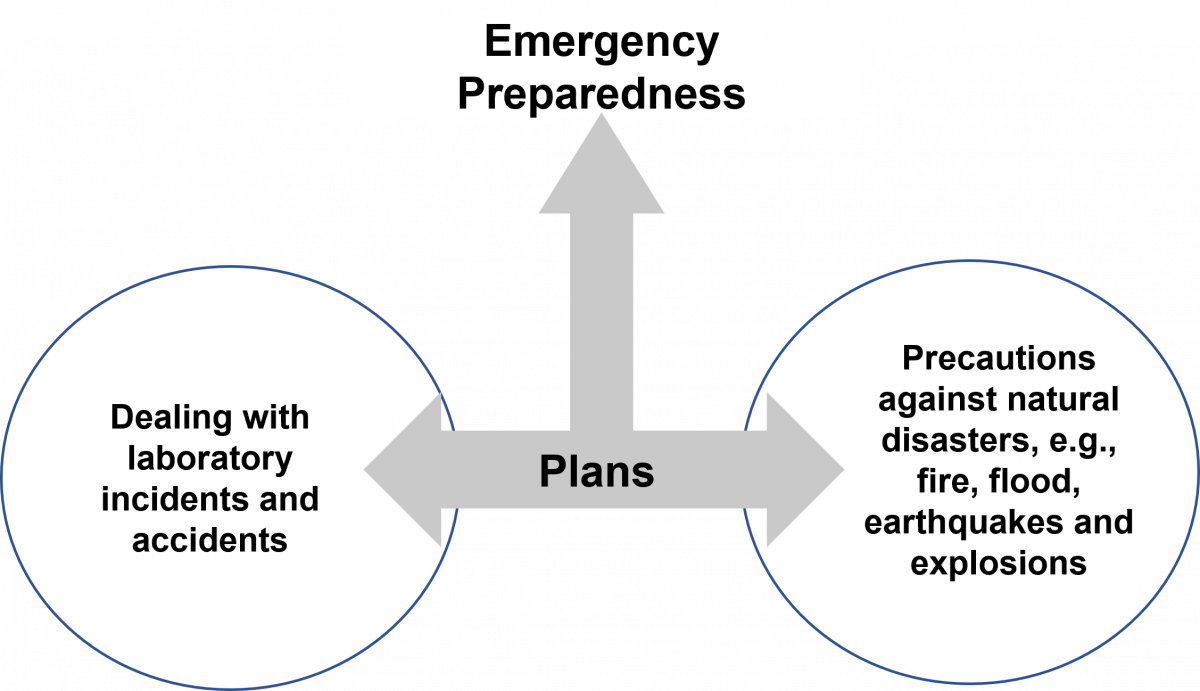
Figure: Composition of an Emergency Preparedness Plan
These protocols should follow standard protocols that are put together by organizations such as the World Health Organisation (WHO) and should be tailored to the needs of the laboratory.
The emergency preparedness plan should be prepared by the senior microbiologist/ laboratory technician who heads the laboratory, after due proceedings from the institutional infection control committee.
The plan can be revised from time to time based on the experiences during the course and should contain, who does what, the standard operating procedures for handling the emergency, checklists for operations and logistics, and emergency contact numbers.
The plan should provide operational procedures for the following scenarios:
- Responses to natural disasters such as fires, floods, earthquakes or explosions
- Risk assessments associated with any new or revised procedures
- Managing exposures and decontamination
- Emergency evacuation of people from the premises
- Emergency medical treatment of exposed and injured persons
- Medical surveillance and clinical management of persons exposed to an incident
- Epidemiological investigation and continuing operations after an incident
Considerations for the Emergency Plan
- Location of high-risk areas, such as laboratories and storage areas
- Identification of at-risk personnel and populations
- Identification of emergency procedures according to the level of risk
- Identification of responsible personnel and their duties, such as the biosafety officer, safety personnel, local health authority, clinicians, microbiologists, veterinarians, epidemiologists, fire services and police services
- Treatment and follow-up facilities that can receive exposed or infected persons
- Transport for exposed or infected persons
- How emergency equipment will be provided, such as protective clothing, disinfectants, chemical and biological spill kits, decontamination equipment and supplies
Resources
Kindly provide your valuable feedback on the page to the link provided HERE
TB Laboratory Accidents Leading to Infectious Spillage
ContentThere are different types of accidents that can occur in the TB lab. These accidents and actions to be taken are elaborated below:
Tube Breaks or Infectious Spills inside the Biosafety Cabinet (BSC)
- Place absorbent tissue over the spill and apply the disinfectant for 30 mins to 1 hour.
- Carefully collect contaminated sharps material and place it in a puncture-resistant container for disposal.
- Clean the walls of BSC with a layer of absorbent paper towel liberally soaked in disinfectant solution.
- Electrical equipment should be checked carefully before it is used.
- Collect other contaminated material in a biohazard bag for appropriate disposal.
Infectious Spills outside the Biosafety Cabinet
- Everyone should immediately vacate the affected laboratory area.
- The laboratory manager should be informed of the incident immediately.
- Staff must be prevented from re-entering the laboratory for at least 1 hour, to allow aerosols to be removed through the laboratory’s ventilation system and allow time for heavier particles to settle.
- Signs should be posted indicating that entry is forbidden during the clean-up procedure (Figure below).

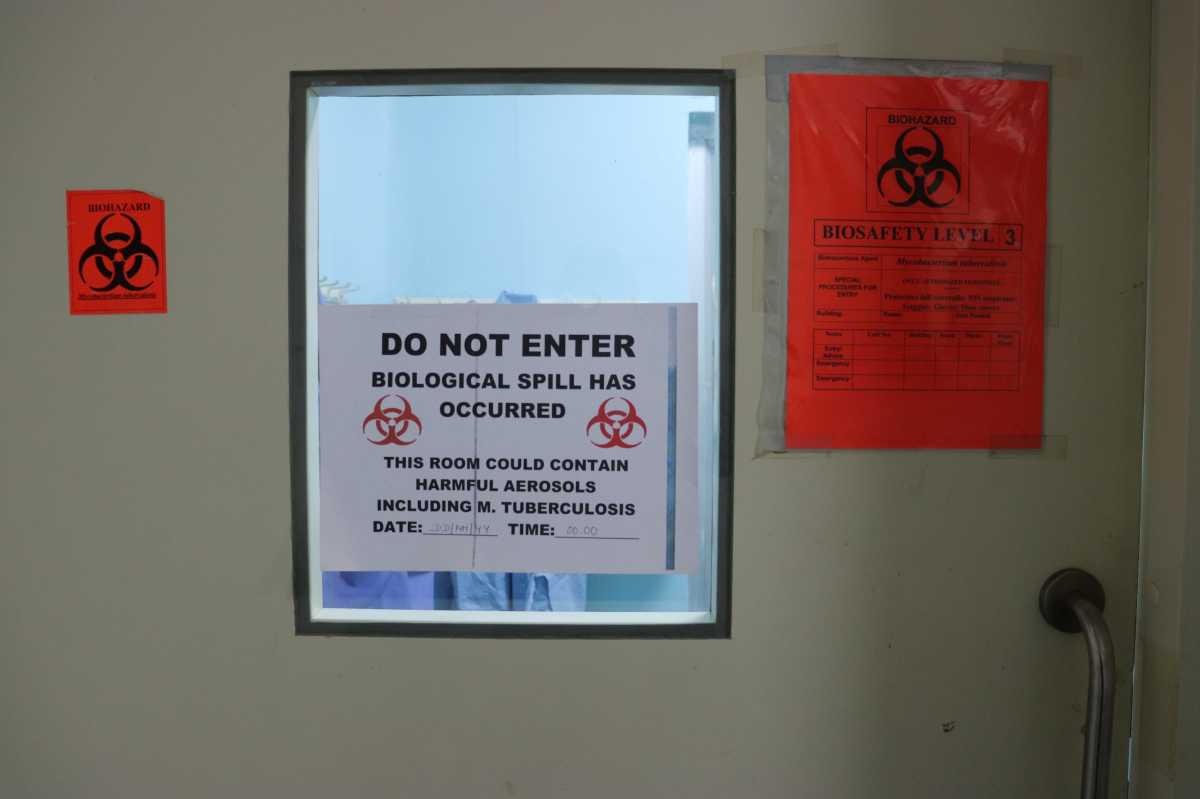
Figure: Door signs when a spill has occurred
- Appropriate protective clothing and respiratory protection MUST be worn during cleaning.
- Standard operating procedures for spill clean-up MUST be followed.
- The incident should be documented.
Spill Clean-up Procedure to be Used
- Put on gloves, a protective laboratory gown and a respirator.
- Re-enter the affected area.
- Cover spill with cloth or paper towels to contain it.
- Pour appropriate disinfectant over paper towels and the immediate surrounding area.
- Apply disinfectant concentrically, beginning at the outer margin of the spill and working towards the centre.
- Allow sufficient time for the disinfectant to act, before clearing away any material for disposal.
- Clean up the decontaminated area and place any contaminated material in a biohazard bag for disposal.
Tube Break or Spill Inside the Centrifuge: Clean-up Procedure
- The tube should be contained within the safety cup.
- Place the unopened safety cup in the BSC.
- Let sit undisturbed for 30 minutes.
- Disinfect all inside surfaces of the centrifuge.
- Carefully open the safety cup in which break occurred, place lid, top-down, next to the cup.
- Remove uncompromised tubes and disinfect the outer surface of tubes by wiping with disinfectant-soaked cotton/ gauze.
- Pour disinfectant into cup and lid, taking care not to splash.
- Let stand for 30 minutes, pour off disinfectant and place the broken tube into the discard container to be autoclaved.
- Disinfect the entire surface of the BSC.
- Wash the cup and lid, and insert in hot soapy water.
- Remove the O-ring to clean underneath, air-dry, and re-silicone the O-ring.
Resources
- World Health Organization Tuberculosis Manual 2012, p42.
- World Health Organization Lab Safety Manual, 3rd edition.
Kindly provide your valuable feedback on the page to the link provided HERE
Spill Clean-up Kit in TB Lab Settings
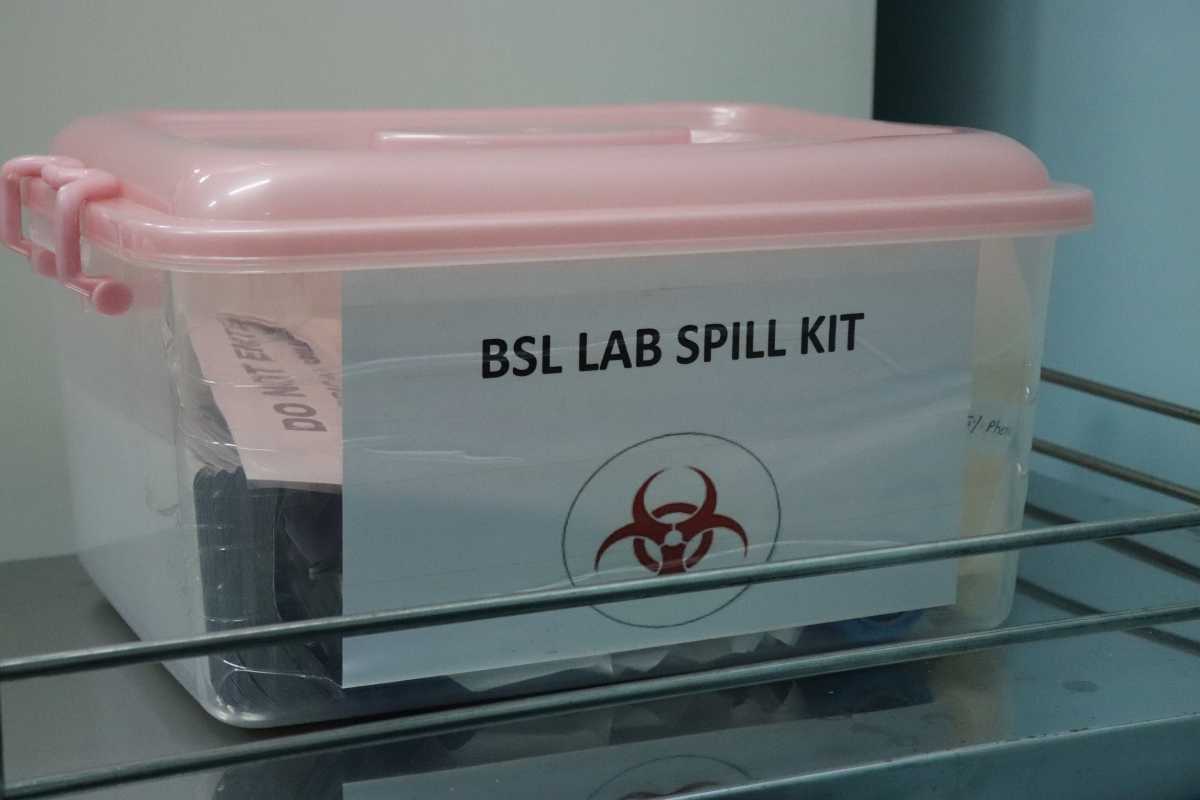
ContentThe spill response kits in a tuberculosis (TB) lab should be made available to deal with any contaminated or hazardous fluid spillage. Spill response kits should be made available:
- 1 kit placed outside the TB containment laboratory
- 1 kit placed inside the laboratory
The spill cleanup kit should include the items listed below:
- Hypochlorite solution (or 5% Phenol) stored in an opaque bottle
- Respirators (1 box)
- Gloves (1 box)
- Laboratory gowns (4-6 disposable gowns)
- Dustpan and brush (for disposal if necessary)
- Paper towels
- Soap
- Sharps container
- Biohazard bags
Note: Hypochlorite solution has a limited shelf life. For a large spill, it may be better to prepare the disinfectant solution at the time of clean up
Figure: BSL lab spill kit with spill incident logbook 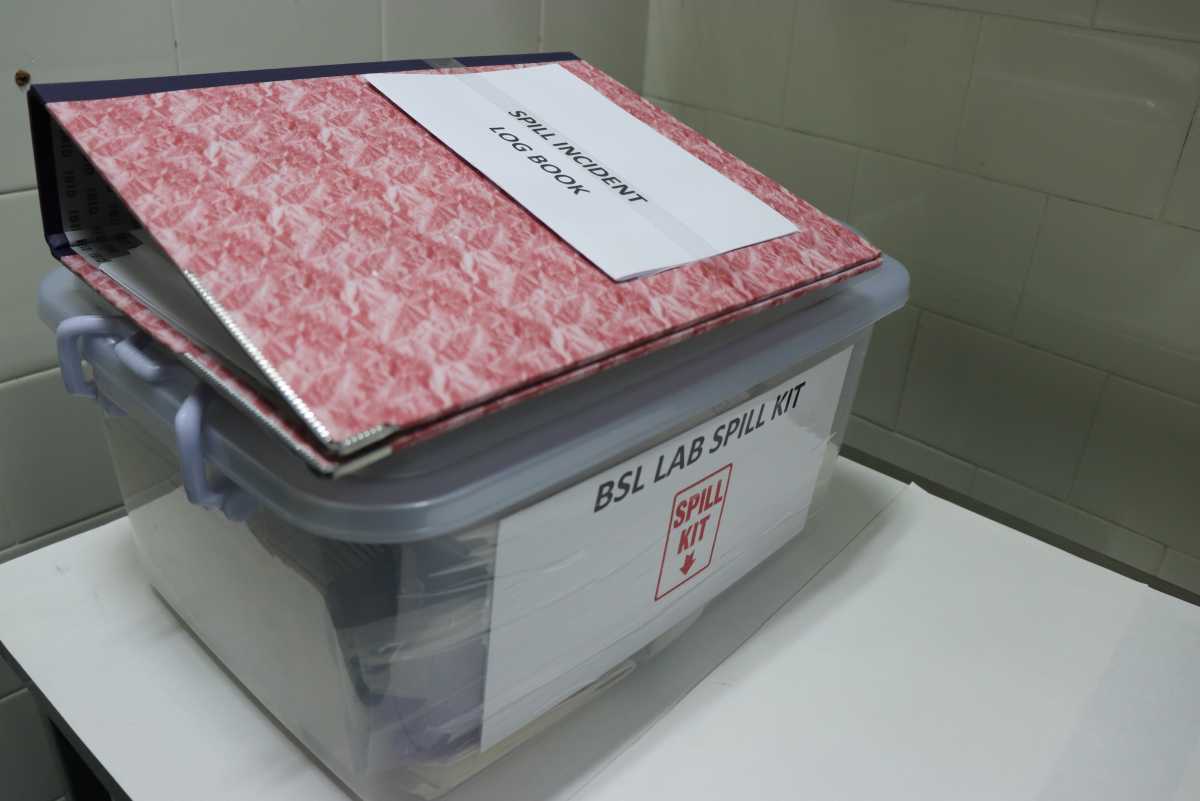
Resources
Kindly provide your valuable feedback on the page to the link provided HERE
Chemical Safety in TB Lab Settings
ContentWorkers in microbiological laboratories are not only exposed to pathogenic microorganisms, but also to chemical hazards. Therefore, knowledge of the toxic effects of these chemicals, exposure routes and hazards, that may be associated with handling and storage, is important.
A few important general safety measures against chemical exposure in laboratories are:
- Wear eyeglasses when using a chemical that can cause fumes or vapours.
- Wear gloves at all times.
- Wear lab coat all the time.
- Do not eat in laboratories.
- Tightly secure lids of all chemical bottles when not in use.
- Read chemical cautions on the labels carefully for all chemicals before use.
- Label the chemicals with appropriate icons to mark the potential risks (Figure).
Safety data sheets or other chemical hazard information are available from chemical manufacturers and/or suppliers. These should be part of the safety or operations manual and easily accessible.
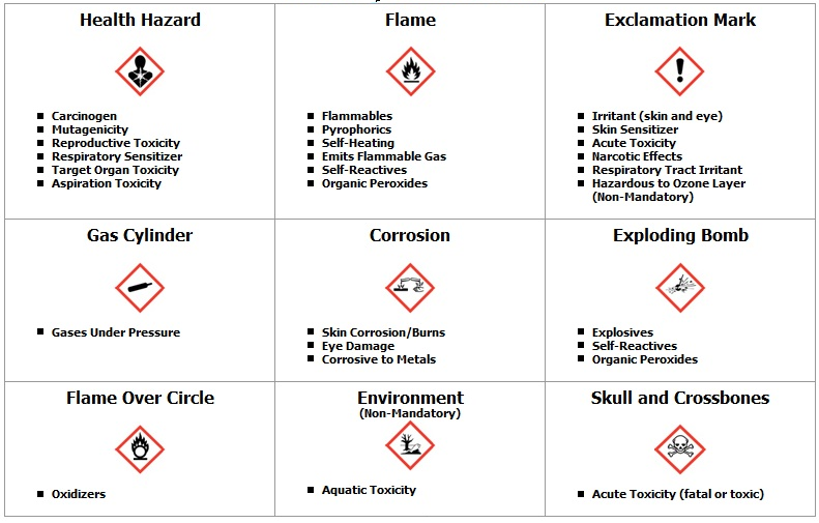
Figure: Different symbols on chemical or reagent bottles and their meaning
Resources
Kindly provide your valuable feedback on the page to the link provided HERE
Fire Safety in TB Lab Settings
ContentFor a fire to start, three components of the triangle namely: Fuel, Oxygen and Ignition sources need to come together (Figure).
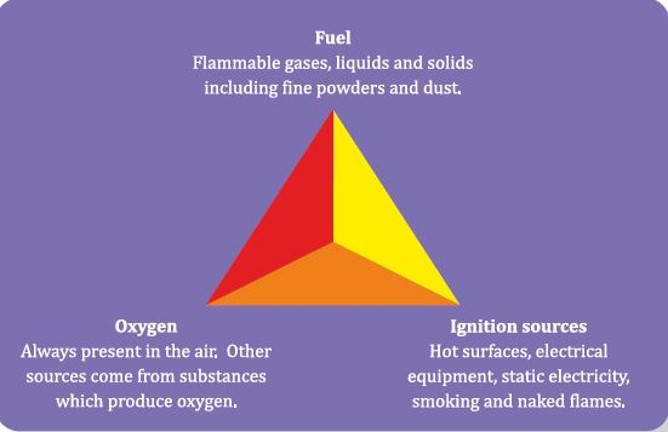
Figure: Components that cause a fire on coming together
- Fire will not start if any one of these components is missing.
- The laboratory personnel should ensure these three components will not come together, to reduce the chance of fire in the laboratory.
- Engineering controls and a variety of fire prevention and suppression strategies should be part of laboratory safety protocols.
Common Causes of Fires in TB Laboratories
- Electrical circuit overloading
- Poor electrical maintenance, e.g., poor and perished cable insulation
- Excessively long gas tubing or long electrical leads
- Equipment unnecessarily left switched on
- Equipment that was not designed for the laboratory environment
- Open flames
- Deteriorated gas tubing
- Improper handling and storage of flammable or explosive materials
- Improper segregation of incompatible chemicals
- Sparking equipment near flammable substances and vapours
- Improper or inadequate ventilation
Considerations for Fire Safety
- Close cooperation between safety officers and local fire prevention officers is essential.
- The effect of fire on the possible dissemination of infectious material must be considered as this may determine whether it is best to extinguish or contain the fire.
- Fire warnings, instructions and escape routes should be displayed prominently in rooms, corridors and hallways.
- Fire-fighting equipment should be placed near room doors and at strategic points in corridors and hallways.
- Fire extinguishers should be regularly inspected and maintained, and their shelf-life kept up to date.
General Measures to Handle Fire in the Laboratory
- All lab personnel must learn how to operate a fire extinguisher.
- Fire extinguisher must be inspected annually and replaced as needed.
- Laboratory should have appropriate class of fire extinguisher.
- In general Class BC or class ABC extinguisher is appropriate.
- The contact information for reaching out to the fire department, should be posted at various locations in the lab.

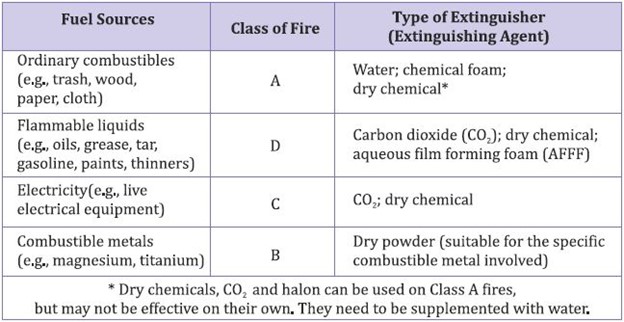
Table: Types and Uses of Fire Extinguishers
Prevention of Fire due to Electrical Hazards
- Electrical installations and equipment should be inspected and tested regularly, including earthing/ grounding systems.
- Circuit-breakers and earth-fault-interrupters should be installed in appropriate laboratory electrical circuits.
- Circuit-breakers do not protect people; they are intended to protect wiring from being overloaded with electrical current, and hence to prevent fires.
- Earth-fault-interrupters are intended to protect people from electric shock.
- All laboratory electrical equipment should be earthed/ grounded, preferably through three-prong plugs.
- All laboratory electrical equipment and wiring should conform to national electrical safety standards and codes.
Resources
Kindly provide your valuable feedback on the page to the link provided HERE
Fullscreen