
Content Status where content has been uploaded and published on LMS.

Retest Procedure for CBNAAT

The assay needs to be repeated by using a new cartridge if one of the following test results occur:

INVALID: An INVALID result indicates that Sample Processing Control (SPC) failed. The sample was not properly processed, or Polymerase Chain Reaction (PCR) was inhibited.

ERROR: An ERROR indicates that Probe Check Control (PCC) failed, and the assay was aborted possibly due to the reaction chamber being filled improperly, a reagent probe integrity, syringe pressure issues, or failure of the CBNAAT module.
CBNAAT Sample Processing for Other Body Fluids

The following procedures are recommended when processing various body fluids with the Cartridge-based Nucleic Acid Amplification Test (CBNAAT):

Bronchoalveolar Lavage (BAL): 

Processing of BAL for CBNAAT assay is given here. However, it is important that each laboratory optimizes this protocol to minimize the error rate.

If the BAL volume is sufficient (approx. 5 ml), centrifuge and dissolve sediment into 1 ml sterile phosphate buffer/ saline, then add sample reagent in a 1:2 ratio.

Inbuilt Controls of CBNAAT Technology

The CBNAAT System automatically performs internal quality control for each sample. 

During each test, the system uses the following inbuilt controls:

System Check Control (SCC)

  • Checks integrity of the instrument, cartridges and PCR reagents.

Sample Processing Control (SPC)

  • Ensures that a sample is correctly processed.
  • Included in the cartridge and is processed with the sample. The DNA is detected by a PCR assay.

Probe Check Control (PCC)

Disposing Off Contaminated Material Safely in DMC Laboratory Settings

The Laboratory Technician (LT) must safely discard contaminated, biohazard waste generated by tuberculosis (TB) laboratories. This waste must be discarded along with the overall waste of the health facility in which TB services are provided.


There are 2 types of waste generated from DMC laboratory settings:

  1. Sputum containers with specimen and wooden sticks
  2. Stained slides

Disposal of Sputum Cups with Left-over Specimen, Lids and Wooden Sticks

Cold Chain Requirement for the Transport of TB Diagnostic Specimens

A cold chain is a system of transporting and storing TB specimens at optimum temperature while being transported from the peripheral health institutions to the diagnostic labs to reduce the growth of contaminating endogenous respiratory organisms.


Cold chain requirements for transportation of TB diagnostic specimens are (Figure 1):

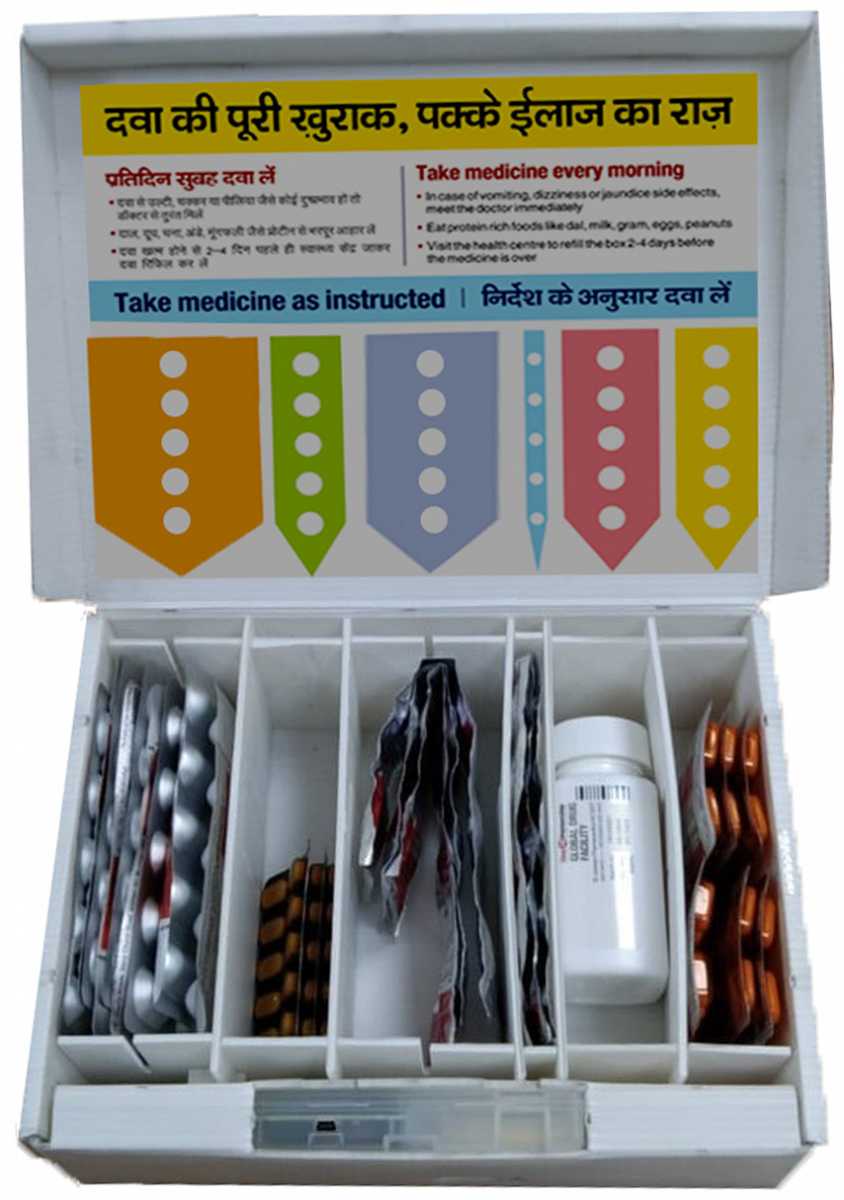
Medication Event Reminder Monitor [MERM] Boxes

The Medication Event Reminder Monitor (MERM) is a digital pillbox that has been designed to monitor Multidrug-resistant TB (MDR-TB) treatment in resource-constrained settings, using relatively affordable technology and drugs provided by the National TB Elimination Programme (NTEP).


Figure: MERM Container for Shorter/ Longer Oral MDR-TB Regimen; Source: Guidelines for PMDT in India, 2021, p143.


Maintenance of the Truenat Instrument - General Principles

Like any other laboratory instrument, the TrueNAT machine needs a periodic maintenance.


Maintenance of Truelab and Trueprep instruments includes:

  • Cleaning the instrument
  • Disinfecting the surfaces
  • Cleaning the spillages
  • Discarding the used consumables
  • Calibrations
  • Replacement of parts
  • Flush protocol
  • Data backup
  • Troubleshooting errors, alerts, warning messages


Frequency of maintenance:

Subscribe to Published on LMS