Measures for Quality Assurance in Microscopy

Sputum smear microscopy is an integral part of the National TB Elimination Programme's (NTEP’s) diagnostic services and can majorly impact the success of the programme.

It is essential to have a credible and well-established quality assurance system to assess the performance of the microscopy service.

NTEP has implemented a multi-level quality assurance network system of sputum smear microscopy in the country consisting of: 

  1. Internal Quality Control (IQC)
  2. External Quality Assessment (EQA)
  3. Quality Improvement (QI)


Stock Register at a DMC

  • Designated Microscopy Centres (DMCs) are the most peripheral laboratory under the National TB Elimination Programme (NTEP) network. Therefore, it is very important for the DMCs to maintain an adequate stock of all consumables.
  • A paper-based stock register is maintained at the DMC and submitted as a part of the ‘Monthly report on programme management, logistics and microscopy’.

Consumables required at a DMC

  • Designated Microscopy Centres (DMCs) are the most peripheral laboratory under the National TB Elimination Programme (NTEP) network.
  • Any person identified to be a presumptive TB patient is first referred to the nearest DMC for sputum examination or their sputum specimens are collected and transported to the DMC. Therefore, it is very important for the DMCs to maintain an adequate stock of reagents and other consumables.
  • The Medical Officer (MO) of DMC is responsible for determining the number of reagents and other materials the DMC needs every month.

Dispatching the sample to a C&DST Lab

For presumptive Drug-resistant TB (DR-TB) patients’, the health facility staff arranges for specimen collection from patient, packs samples as per the Standard  Operating Procedure (SOP) for triple layer packaging and dispatches it for transportation in cool chain to the linked Culture and Drug Susceptibility Testing (C&DST) laboratory.

All necessary materials for specimen collection and modality for transportation need to be made available/ arranged at the Designated Microscopy Centre (DMC)/ Peripheral Health Institute (PHI) by the District TB Officer (DTO).


Truenat

Truenat is an indigenous rapid molecular test platform that is currently under use in NTEP for diagnosis of TB and Rif Resistance. It is a platform utilising real-time Polymerase Chain Reaction (PCR) technology built into micro-PCR chips.

Testing on Truenat involves three components:

Steps involved in Smear Microscopy

Sputum smears must be prepared promptly after samples are collected or received in the laboratory.

Steps in smear preparation are as follows:

  1. Cleaning and Labelling of slide (No 1)
  2. Making the smear (No 2-3)
  3. Drying and Heat fixing the smear (No 4-5)
  4. Staining and counterstaining the smear (No 6- 12)
  5. Examination of slide/Reading the Smear (No 13-14)
  6. Reporting and recording the observations (Digitally and TB Lab register)
  7. Storage of slides (as per Laboratory Numbers in closed box) (No 15)


Qualities of a good sputum smear

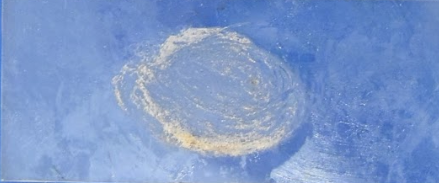
Good quality smears are essential for accurate examination and results. A good quality sputum smear is one that is of uniform thickness and made from the mucopurulent portion of the sample in the center of the slide (Figure 1).


Do’s and Don’ts of a Good Quality Smear

  • Do ensure that the smear size is 3 cm by 2 cm
  • Do ensure there are no fingerprints on the prepared smear


Subscribe to LT-Microscopy & NAAT