First line anti TB drugs

First line drugs are the least toxic and most effective drugs that are used in first line of therapy.


The first-line antituberculosis drugs that form the core of treatment regimens are


Drugs

Characteristics

Rifampicin (R)

Helps in early clearance of tuberculosis bacteria from the specimen

Isoniazid (H)

Educating patient on Sputum collection and dispensing Sputum cup

Educating patients on collection is essential to have good quality sputum. The healthcare worker (HCW)/ medical officer (MO) or the laboratory technician (LT) can educate patients on how to collect and dispense sputum.

The HCW/MO/LT provides a new sputum cup with the Laboratory Serial Number written on its side to the patient. They should explain that sputum should be collected in an open place or in a well-ventilated room; it should not be collected in closed rooms, toilets and ill-ventilated rooms

Role of STLS at a DMC

The Senior TB Laboratory Supervisor (STLS) is the person responsible for monitoring the day-to-day activities of all the microscopy centres and nucleic acid amplification test (NAAT) sites and is thus essential to the success of the National TB Elimination Programme (NTEP). They also ensure the quality of TB diagnostic services.


Roles of STLS at the DMC

Presumptive TB

Presumptive TB case refers to a patient who presents with symptoms or signs suggestive of TB disease (previously known as a TB suspect) and where further diagnostic workup including bacteriological investigation is required.

 Presumptive TB can be categorized into

  1. Presumptive Pulmonary TB (P TB) - Symptoms are directly related to lungs (Cough, hemoptysis)

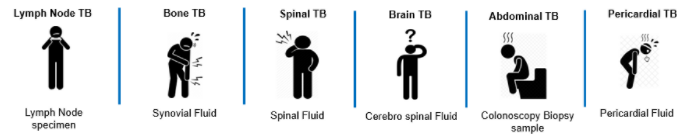
  2. Presumptive Extra Pulmonary TB (EP TB) - Symptoms/ signs are specific to an extra pulmonary site (example: Lymph node swelling)

NAAT Labs and their role

The National Tuberculosis (TB) Elimination Program (NTEP) has a network of Nucleic Acid Amplification Tests (NAAT) laboratories coupled with Designated Microscopy Centers (DMCs) to form the backbone of the diagnostic component of TB services.


Nucleic Acid Amplification Tests (NAAT) laboratories includes Cartridge-based NAAT (CBNAAT) and TrueNat tests. These tests detect tuberculosis as well as rifampicin resistance and are more sensitive than smear microscopy.


Laboratory Hierarchy and Network

NTEP laboratory network is comprising of National Reference Laboratories (NRLs), state level Intermediate reference laboratories (IRLs), Culture & Drug Susceptibility Testing (C & DST) laboratories and peripheral level laboratories. Peripheral level laboratories consist of  designated microscopy centres (DMCs) and NAAT labs.


NTEP has a quality assured laboratory network for bacteriological examination of sputum in a 3-tiered system.

Solid and Liquid Culture in TB

Culturing TB Bacilli is well known and historic method for detection/ confirmation of Tuberculosis. It is a highly sensitive and specific phenotypic test; it can detect even a few viable bacilli in the sample (Upto 10 Colony Forming Units- CFUs). TB bacilli multiply in the culture and form colonies of TB bacilli which can are easily be identified.

Based on the growth media used Culture is divided in to two types, Solid and Liquid Culture methods. Types Culture:

Subscribe to LT-Microscopy & NAAT