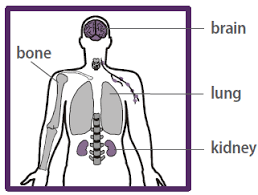

Presumptive TB
ContentPresumptive TB case refers to a patient who presents with symptoms or signs suggestive of TB disease (previously known as a TB suspect) and where further diagnostic workup including bacteriological investigation is required.
Presumptive TB can be categorized into
-
Presumptive Pulmonary TB (P TB) - Symptoms are directly related to lungs (Cough, hemoptysis)
-
Presumptive Extra Pulmonary TB (EP TB) - Symptoms/ signs are specific to an extra pulmonary site (example: Lymph node swelling)
-
Presumptive Pediatric TB - Symptoms of TB in young children are more difficult to identify and can be more general (fever, weight loss)
Resources:
- Technical and Operational Guidelines for TB Control in India 2016
- Definitions and reporting framework for tuberculosis
Kindly provide your valuable feedback on the page to the link provided HERE
-
Presumptive Pulmonary TB
ContentPulmonary TB(PTB) is primarily involves lungs. Screening should be done for the following symptoms:
Figure: Signs and Symptoms of active TB
Regular screening of Presumptive TB cases with unexplained cough of any duration should be done and checked for:
- History of close contact with known active TB case
- Whether the patient has developed Presumptive/confirmed extrapulmonary TB(EPTB)
- High-risk groups: PL HIV, Diabetics, Malnourished, Cancer patients, patients on immunosuppressive therapy or steroids
Resources:
Kindly provide your valuable feedback on the page to the link provided HERE
Testing for TB diagnosis
ContentNational Tuberculosis Elimination Programme (NTEP) strives for all presumptive TB patients to be microbiologically confirmed. Under NTEP, the acceptable methods for microbiological diagnosis of TB are:
Sputum Smear Microscopy (for Acid Fast Bacilli - AFB): Sputum Smear microscopy is the primary tool which is reliable, inexpensive, easily accessible and rapid method of diagnosing PTB, where in the bacilli are demonstrated in the sputum. Two types:
-
Ziehl-Neelsen Staining
-
Fluorescence staining
Rapid diagnostic molecular test: Rapid molecular tests that use techniques like NAAT are very specific. They amplify the genomic material in the patient sample and hence enhances detection
-
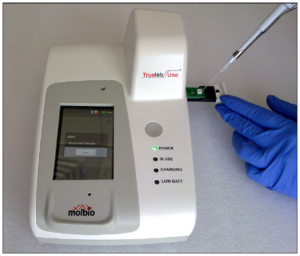
Nucleic Acid Amplification Test (NAAT) e.g., GeneXpert, TrueNat
Figure: Genxpert Machine for CBNAAT
Figure: Truenat Machine
- Line Probe Assay
Culture and DST: A culture test involves studying bacteria by growing the bacteria on different substances. This is to find out if particular bacteria are present. In the case of the TB culture test, the test is to see if the TB bacteria Mycobacterium tuberculosis, are present.
Two types:
-
Solid (Lowenstein Jensen) media
-
Liquid media (Middlebrook) e.g., Bactec MGIT etc.
-
Biological Specimen for Diagnosis of TB
ContentFor laboratory diagnosis of TB, different biological specimens are used.
Pulmonary TB: Sputum sample is used. Sputum is a thick fluid produced in the lungs and in the adjacent airways. Normally, a spot sample and a fresh morning sample is preferred for the bacteriological examination of sputum.
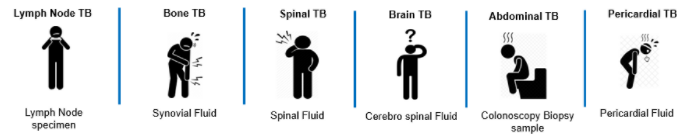
Extra Pulmonary TB:
Resources:
Kindly provide your valuable feedback on the page to the link provided HERE
Sputum Collection Process
ContentPresumptive TB patients attending the TB Diagnostic centre (TDC) will be referred for sputum examination at the same facility. The patients are given the sputum container with laboratory serial number written on its side. The patient is:
Figure: Sputum Collection Process
- Provided with the labelled sputum cups and demonstrated how to open and close the container.
- Given a labelled container with instructions to cough out sputum into the container early in the morning after rinsing the mouth with water. This is the early morning specimen. This is labelled as Specimen ‘b’.
- Ensure collection of sputum samples in an open, well-ventilated area designated for this purpose.
- Given a sputum container with instructions to collect an early morning specimen and go with the sputum specimen to the TDC(if the health facility is not a TDC) where the spot specimen can be collected. If the patient cannot travel to the TDC, then the spot specimen could be collected at the nearest health facility or sputum collection centre and transported to the TDC.
Video fileVideo: Process of sputum collection
Resources:
Role of Health Volunteers in TB Case Finding
Content- Community Health Volunteers play a significant role in increasing awareness regarding the burden of TB and the importance of preventing it and regularly screening the population.
- Community Health Volunteers should use the various platforms in the communities, such as the PRI meetings, school meetings etc., for spreading the information on TB. Using such media, the Community Health Volunteers should focus on building community awareness to improve the patients' health-seeking behaviour.
- Community Health Volunteers should screen the vulnerable population for Tuberculosis during the Active Case Finding Campaign. Positive TB suspects identified should then be referred for testing, post which, if diagnosed with TB, should be initiated on treatment.
- Community Health Volunteers should also ensure that those TB patients initiated on treatment adhere to the treatment.
- Community Health Volunteers should also record the population screened; sputum examined cases, diagnosed cases and patients initiated on treatment.
- Community Health Volunteers should also confirm the patient's address in their respective locality for correct patient identification.
Kindly provide your valuable feedback on the page to the link provided HERE
Prevention of TB
ContentAs TB is an airborne infection, TB bacteria are released into the air when someone with infectious TB coughs or sneezes. The risk of infection can be reduced by taking simple precautions:
Figure: Measures for control and prevention of tuberculosis
TB Preventive Treatment(TPT) also has a very important role in prevention of TB. Presently, household contacts of sputum-positive TB patients are given TPT upon confirmation of TB infection and ruling our active Tuberculosis.
Resources:
Fullscreen